
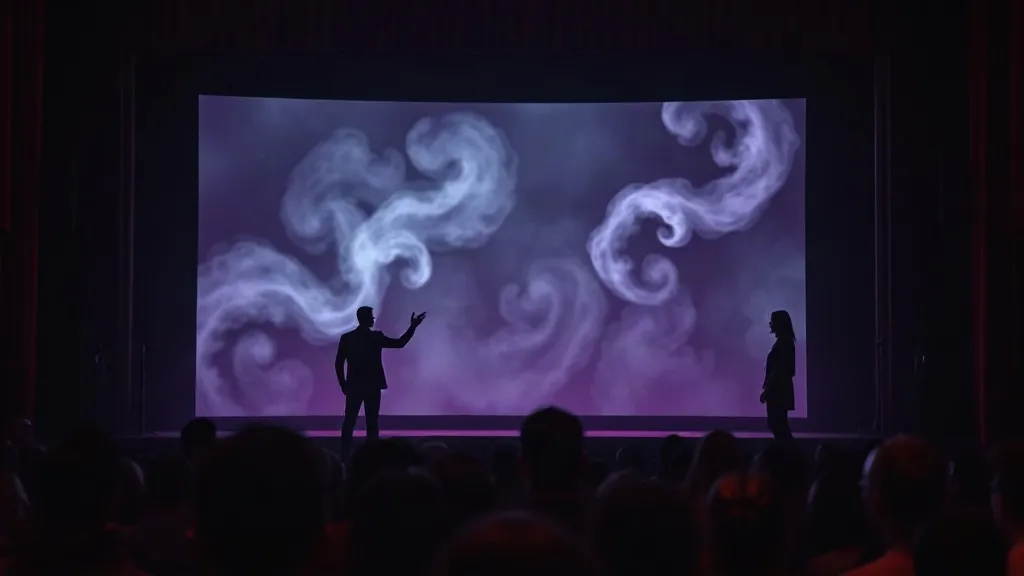
Horror has always been the genre that could. It turns modest budgets into massive returns, launches franchises, and taps into something primal in audiences. On Wednesday, two of its most successful practitioners, Jason Blum and James Wan, took the stage at Blumhouse Atomic's Business of Fear panel to celebrate a banner year for the genre and to break down the unlikely success of Obsession, the summer's surprise horror hit. But before they got to the scares, they had to address the elephant in the room: the name change.
The Name Game: Blumhouse Atomic
The panel opened with a brief explanation of the rebranding from Blumhouse Productions to Blumhouse Atomic. According to Blum, the new name reflects the company's expanded focus on genre storytelling across film, television, and interactive media. "We're not just making movies anymore," Blum said. "We're building worlds that explode in unexpected directions." The atomic metaphor, he explained, captures the explosive, chain-reaction nature of horror itself: a single idea can spawn sequels, spin-offs, and entire universes. Wan, who has built his own interconnected horror universe with The Conjuring, nodded in agreement, noting that the genre's scalability is what makes it so attractive to studios.
Horror's Box Office Dominance
The numbers speak for themselves. Horror has consistently delivered strong returns in recent years, often outperforming bigger-budget tentpoles on a fraction of the cost. Blum and Wan discussed how the genre's efficiency has made it a cornerstone of Hollywood's release calendar. "Horror is the only genre where you can have a $10 million movie become a $100 million franchise," Blum said. "That's why every studio wants a piece of it." Wan added that the key is not just budget but execution: "Audiences can smell inauthenticity. You have to deliver real scares, real tension, and characters they care about."
Why Audiences Keep Coming Back
Both men agreed that horror's appeal lies in its universality. Fear is a shared human experience, and horror films offer a safe way to confront it. "In a world that feels increasingly unpredictable, horror gives people a controlled dose of chaos," Wan explained. "You leave the theater feeling relieved, even exhilarated." Blum noted that the genre also attracts top-tier talent because it allows for creative risk-taking. "Directors and writers know they can push boundaries in horror without the constraints of other genres."
'Obsession': The Little Film That Could
Much of the panel focused on Obsession, the summer release that became Blumhouse Atomic's biggest hit of the year. The film, a psychological thriller about a man's descent into obsession, was made for under $15 million and went on to gross over $120 million worldwide. Blum credited the film's success to its relatable premise and a marketing campaign that leaned into mystery rather than jump scares. "We didn't show the monster in the trailer," he said. "We let the audience's imagination do the work." Wan praised the director's restraint, noting that Obsession relies on atmosphere and character rather than gore. "It's a reminder that the best horror is often the quietest."
The Marketing Strategy Behind the Hit
The panelists delved into the unconventional marketing for Obsession. Instead of a traditional blitz, Blumhouse Atomic used targeted social media campaigns and word-of-mouth screenings. They also partnered with mental health organizations to ensure the film's portrayal of obsession was handled responsibly. "We wanted to start conversations, not just sell tickets," Blum said. The approach paid off: the film became a cultural talking point, with audiences debating its ambiguous ending for weeks.
The Future of Fear
Looking ahead, both Blum and Wan see horror continuing to evolve. Wan hinted at new projects that blend horror with other genres, such as science fiction and historical drama. Blum emphasized the importance of fresh voices, announcing a new initiative to fund first-time horror directors. "The genre thrives on new perspectives," he said. "We need to keep the pipeline open." They also touched on the rise of horror in streaming, with Blum noting that platforms are hungry for genre content because it drives subscriptions. "Horror is a global language," Wan added. "It travels well."
Frequently Asked Questions
What is Blumhouse Atomic?
Blumhouse Atomic is the rebranded name for Jason Blum's production company, reflecting its expanded focus on genre storytelling across film, television, and interactive media.
Why was 'Obsession' so successful?
'Obsession' succeeded due to its relatable premise, restrained marketing that emphasized mystery, and strong word-of-mouth. It cost under $15 million and grossed over $120 million worldwide.
What makes horror such a profitable genre?
Horror films typically have low budgets but high returns, making them attractive to studios. They also offer creative freedom and attract top talent.
What did Blum and Wan say about the future of horror?
They see horror continuing to evolve with new voices, genre-blending, and streaming platforms. Blum announced an initiative to fund first-time horror directors.
Did the panel address the name change from Blumhouse to Blumhouse Atomic?
Yes, Jason Blum explained that the new name reflects the company's broader ambitions in genre storytelling, using the atomic metaphor to describe the explosive, chain-reaction nature of horror.